What Happens After the Votes are Cast?
October CEO Update, from Yamani Yansá Hernandez
Six days before the midterms, a look into working family households across the nation tells a troubling story: 63% of Americans say they are living paycheck to paycheck, and 71% of those households say a single week’s delay in pay would cause serious financial hardship. Meanwhile, 52 maternity units have closed nationwide since July 2025, with more closures planned as Medicaid cuts threaten already fragile healthcare systems. Families and communities are also navigating increasingly aggressive immigration enforcement, attacks on transgender people, and climate disasters that are stretching already strained communities to the breaking point.
This is the reality that people are carrying into the voting booth on November 3rd. Much of what’s on the ballot will shape how our families will survive long after.
Voters will decide much more than who controls Congress. In Virginia alone, three proposed constitutional amendments address reproductive freedom, marriage equality, and the restoration of voting rights to people convicted of felonies. Think about that for a moment: Three questions on one ballot, each addressing something deeply personal – whether you can make decisions about your pregnancy, whether your marriage is recognized, and whether a past conviction can keep you from having a voice in your community’s future.
And while voters weigh these decisions, the Trump administration pushes to expand federal control over election administration and gain access to state voter rolls – another reminder of how much uncertainty and anticipation surrounds this election.
But what does it mean to build sustainable power to address these challenges beyond elections?
In Ohio and Pennsylvania, Groundswell Fund grantee New Voices for Reproductive Justice is developing the next generation of Black reproductive justice leaders. Through its six-week We The People program, emerging organizers studied voting rights, electoral systems, and how government decisions affect their communities. Its Defend Our Kin program builds on that work in Cleveland, Pittsburgh, and Philadelphia, supporting organizers as they put their skills to work locally. New Voices is making sure the next generation of Black organizers has the knowledge, relationships, and confidence to organize for the changes they want to see.
Back in Virginia, where those constitutional amendments are on the ballot, Groundswell Action Fund grantee New Virginia Majority has spent nearly two decades building relationships with communities too often left out of political decision-making. Its work spans voting rights, reproductive freedom, housing, and immigrant protections. Through its Solidarity Committee, volunteers are also helping immigrant neighbors navigate the growing threat of federal enforcement. People need a voice in government, but they also need someone standing beside them when their families are under threat.
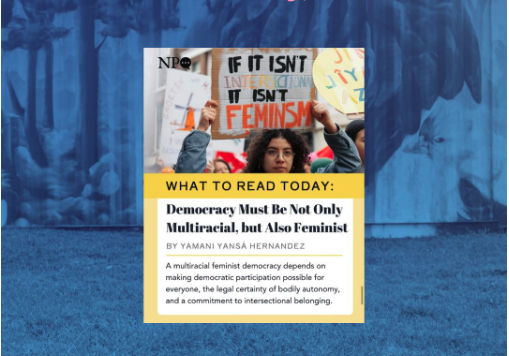
This question has been on my mind since our grantee gathering in Memphis this summer. In my recent Nonprofit Quarterly essay, “Democracy Must Be Not Only Multicultural, but Also Feminist,” I reflect on what Groundswell grantees My Sistah’s House and CHOICES Center for Reproductive Health are teaching us about democracy. Through building resources and providing access, grantee organizations protect the safety, dignity, and self-determination of individuals and their communities, allowing their full participation in public life. This work – this transformational building – is a reminder that bodily autonomy, safety, and care are fundamental to building a democracy that works for everyone. I hope you’ll give it a read.
I’ve been carrying that same conversation into rooms with movement leaders, donors, and funders across the country this month. From the Midwest to Seattle, San Francisco, and Los Angeles, I’ve been having some frank conversations about what this moment requires of philanthropy: we’re asking grassroots organizations to defend hard-won rights, keep their communities safe, and build alternatives to systems that are failing people — yet many are doing so with increasingly less funding and greater uncertainty. That contradiction deserves more than another conference panel. It deserves serious conversation about how we move resources, share risk, and stand alongside movements for the long haul.
I won’t pretend to know what November 3 – or the days that follow – will bring. We don’t know what efforts the federal government may make to challenge or discredit the election results. But I do know this: our movements have weathered extraordinary challenges before. We have the relationships, the courage, and the collective strength to face what comes next. And none of us has to face it alone.